The Carlsbad Sprint Triathlon Race Day Timeline for Traveling Athletes
Your complete Carlsbad Sprint Triathlon race day timeline — from pre-dawn parking to post-race brunch and decoding your official results. Built for traveling athletes.
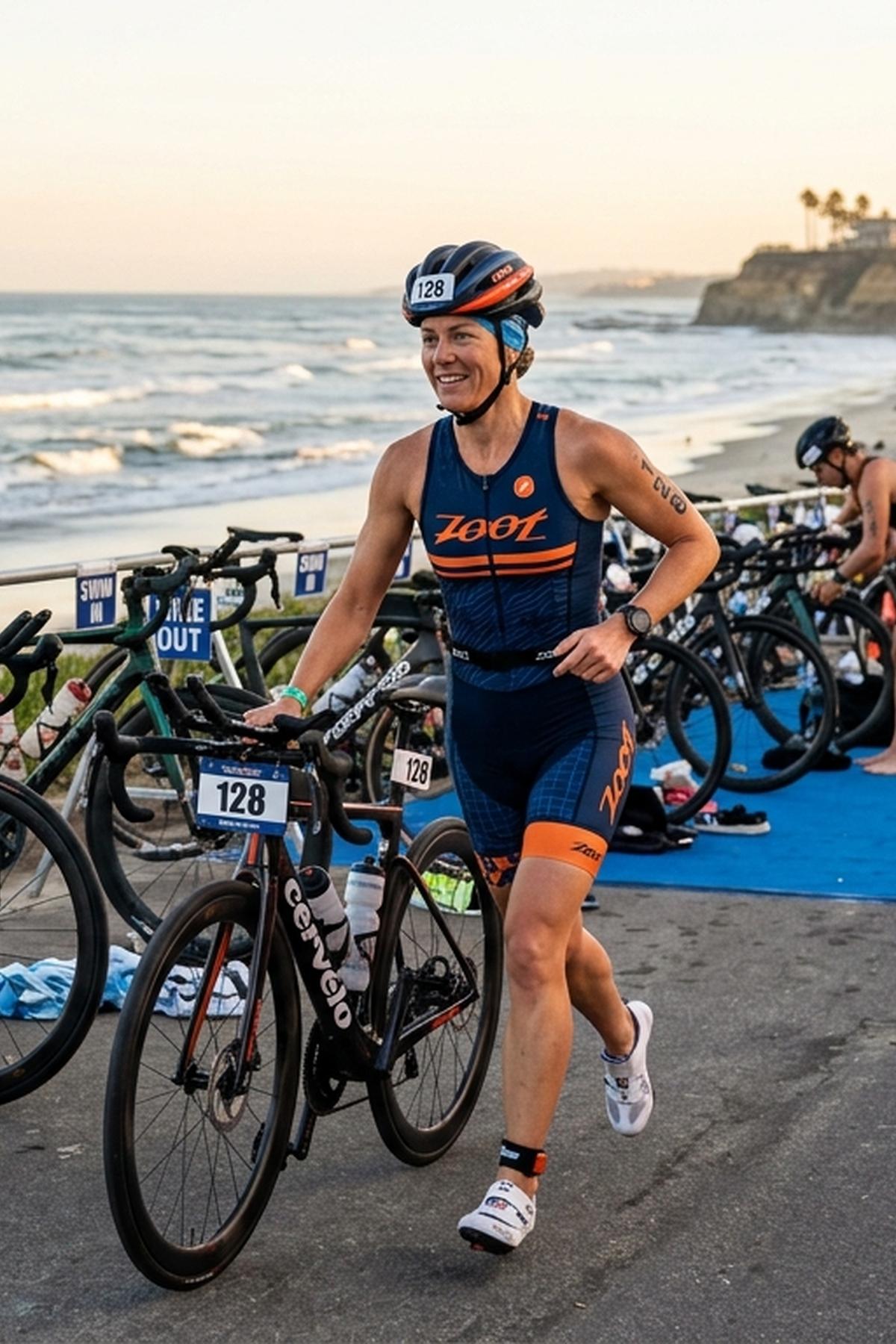
The alarm goes off at 4:15 a.m. and for a second you forget where you are. Then it comes back. Race day in Carlsbad. You flew in from out of town, rented a car, and you have exactly two hours before transition closes. You have never seen the swim buoys in person, you are not sure where to park, and your family is still asleep at the hotel. Take a breath. This timeline breaks down the full arc of race day so you can walk out the door feeling like an insider rather than a nervous first-timer clutching a wetsuit bag in the dark.
Race Morning at a Glance
- Aim to arrive at the Carlsbad venue by 5:30 a.m., before lots fill and the athlete shuttle boarding wraps up.
- Transition closes roughly 30 minutes before the first wave, so lay out gear in the order you will need it, with run shoes positioned last.
- Hold off on panicking over result codes like DNS, DNF, or DQ until you understand what each one actually means on the official record.
Pre-Dawn Arrival: Parking in Carlsbad Without Losing Your Mind
The Carlsbad Sprint Triathlon is staged near Tamarack State Beach, and the coastal access roads get congested fast on race morning. If you are staying along Carlsbad Boulevard or within walking distance of the venue, you may be able to leave the rental car at the hotel entirely. Most traveling athletes driving from a hotel near Palomar Airport Road or the Carlsbad Premium Outlets, though, will need to sort parking before anything else.
Designated race parking areas typically open off Carlsbad Boulevard and Tamarack Avenue. These lots fill by 5:45 a.m. on race day. Arriving before 5:30 a.m. almost always locks in a spot without circling. Street parking in the surrounding residential blocks has posted city restrictions, and race officials coordinate with Carlsbad enforcement, so read every sign before walking away from your car. A ticket on race morning is a miserable way to start a triathlon.
Some race editions offer a satellite lot with a shuttle to the venue. Boarding typically starts around 5:00 a.m. and runs continuously until transition closes. Check the athlete guide your race director sends in the week before the event. That document has the specific lot address and shuttle schedule. Driving a few blocks to the satellite lot and riding the shuttle takes less mental energy than hunting for a beachside spot at dawn, and you arrive at the venue already focused.
Transition Setup: Laying Out Gear When You Don't Know the Venue
Transition closes to athletes roughly 30 minutes before the first wave launches. For the Carlsbad Sprint, that usually means a hard stop somewhere between 6:15 and 6:30 a.m. Once it closes, no one gets back inside to adjust gear. Give yourself a full 25 minutes inside transition to set up without rushing.
Here is the setup order that works consistently for first-timers at an unfamiliar venue:
- Rack your bike by the seat on the designated rack, not the handlebars, unless your wave instructions say otherwise.
- Place your helmet upside-down on the handlebars with sunglasses already tucked inside it.
- Set bike shoes flat just in front of the rear tire, or clip them into the pedals if you are comfortable with a flying mount.
- Lay a small towel on the ground in front of your bike tire.
- Place your run shoes open and ready on the towel, with your race belt, hat, and any nutrition in a neat cluster beside them.
- Pull your wetsuit on and zip it before leaving the transition zone, not in the parking lot.
The Carlsbad venue has a paved transition surface, which makes running barefoot from the swim exit to your rack much more forgiving than grass or gravel. Before you leave transition after setup, walk the full path: swim exit to your rack, rack to the bike mount line, bike dismount line back to your rack on the return. Memorize a visual landmark at your row, such as a bright towel color or a distinctive bike frame. That mental map carries you through T1 when your brain is still half-submerged.
Traveling athletes who shipped or checked a bike bag have a few extra items worth confirming before leaving transition:
- CO2 cartridges or a frame pump attached and working
- Race number affixed to the bike frame per race guide instructions
- Sunscreen already applied before putting on the wetsuit
- Nutrition clipped to the bike or loaded into kit pockets
- Timing chip on your left ankle, strapped snug but not cutting off circulation
The Swim Start: Reading the Ocean at Carlsbad
The Carlsbad swim is an ocean course, typically around 750 meters for the sprint distance. Waves launch off the beach in groups, usually organized by age group or gender. Your wave will be called at least 10 minutes before its start time for a beach briefing near the water. During earlier waves, walk down to the waterline and feel the conditions for yourself. Ocean swims shift in chop and current from hour to hour, and what looked calm at 6:30 a.m. can feel entirely different at 7:15 a.m.
Water temperature off Carlsbad typically runs between 62 and 68 degrees Fahrenheit during the race season. A wetsuit is both legal and recommended for most athletes at that range. Reviewing current tidal conditions through NOAA's tide gauge data the evening before gives you a read on expected swell and surge at your swim time. Two minutes of research can help you decide whether to seed yourself at the front of your wave or stay in the middle to avoid the initial beach-entry scramble.
The sprint course typically involves a beach entry run, a swim out to a far orange buoy, a left turn, and a return leg to shore. Sight every six to eight strokes on the outbound leg. The Carlsbad buoys are large and bright, but early morning ocean glare is real. Pick a fixed landmark on the shore behind the finish buoy as your aim point on the return. That technique keeps your swim line cleaner without stopping and craning your neck every few strokes.
The Bike and Run: What the Carlsbad Course Asks of You
After the swim exit, run across the timing mat and into transition. T1 for a sprint triathlon should take 90 seconds to two and a half minutes at most. Dry your feet if you trained with socks. Do not stop to put socks on for the first time in a race. Your legs will feel heavier than expected heading out on the bike, but that is entirely normal off an ocean swim.
The bike course runs through Carlsbad's coastal neighborhoods with moderate rolling terrain heading inland before looping back toward the ocean. Road surfaces are generally smooth, but a few tighter turns near the residential sections catch athletes by surprise. Keep your speed measured through those corners. The sprint bike leg covers around 12 miles, and any time lost to a crash or a flat costs far more than the few seconds gained by pushing hard into a blind bend.
The run is a 5K out-and-back or loop course near the beach. Expect your legs to protest for the first quarter mile off the bike. Settle into your pace and let the crowd noise carry you forward. The Carlsbad run course is flat and spectator-friendly, which means your family will likely find a good spot near the turn-around point. That is where most athletes get their loudest cheers and find a gear they did not know they had left.
Crossing the Finish Line: The First Few Minutes After
You will receive a finisher medal and a foil heat blanket near the finish chute. Grab both and keep moving so the next athlete can cross. Head straight for water and something with carbohydrates before anything else. Your blood sugar will be low, and the crash hits fast if you stop to take photos before refueling.
Transition reopens to athletes after the final wave finishes, which usually falls around 9:30 to 10:00 a.m. for a morning sprint race. Retrieve your bike and gear as soon as it opens. Busy finish areas see bikes bumped off racks and gear accidentally kicked around. Getting your equipment back to your car or a secure spot before settling into the post-race food zone saves you from discovering a bent derailleur an hour later.
Post-Race Brunch: Where to Eat in Carlsbad After You Cross
The finish line spread usually covers bananas, bagels, and sports drink. After a sprint triathlon, most athletes are genuinely hungry for a real meal within 45 minutes of finishing. Carlsbad has excellent options within a short walk or drive of the venue, and several of them open early enough to catch the race-day crowd.
Post-Race Dining Spots Near the Carlsbad Venue
| Restaurant | Style | Distance from Venue | Best For |
|---|---|---|---|
| Campfire | American brunch, wood-fired | About 1 mile | Celebrating with family |
| Pizza Port Carlsbad | Casual pizza and craft beer | About 0.5 miles | Groups and a relaxed post-race vibe |
| Vigilucci's Seafood and Steakhouse | Seafood brunch plates | About 0.8 miles | Post-race splurge meal |
| The Coyote Bar and Grill | Mexican brunch and margaritas | About 1.2 miles | Laid-back recovery with chips and salsa |
If you have kids with you, Pizza Port is the easiest call. It is close, loud in the best way, and nobody minds if you are still wearing your race kit. For something more sit-down and celebratory, Campfire is worth the short walk and typically opens before 10 a.m. on weekends. If you want a proper spread to mark the occasion, Vigilucci's is the one to book the night before so a table is waiting when you arrive hungry and salt-crusted from the ocean.
Official Results: What Those Codes Actually Mean
Results typically go live within one to three hours of the last finisher crossing the timing mat. You will receive a link in your post-race email, or you can check the timing company's results page directly. Your official record will show your finishing time, overall placement, and age group rank.
First-timers often panic when a letter code appears next to their name instead of a finish time. Before you start texting your family that something went wrong, take a moment to look up racing result statuses and understand what each code actually means. A DNS means the athlete did not start the race. A DNF means they did not finish. A DQ indicates a disqualification. If your name carries one of those codes and you know you crossed the finish line, contact the race director before assuming there is a mistake. Timing chip failures happen at every race, and they are almost always fixed within a day or two with a short email and a photo of your finisher medal as evidence.
Age group awards take place at a podium ceremony near the finish area, typically within an hour or two of the last finisher. Check the event schedule when you pick up your race packet, because the ceremony does not hold long. If you are in the food line when your age group is called, you may not get a second chance to collect your hardware on the day. That is a story worth avoiding.
USAT-sanctioned events like the Carlsbad Sprint apply a consistent set of race conduct rules covering transition behavior, drafting on the bike, and equipment standards. If you receive a penalty notice at the finish, ask a race official to explain the infraction before filing anything formal. Most first-time penalties come from unintentional draft violations, and understanding the three bike-length rule before you race takes five minutes that can save you a lot of frustration later.
From Alarm Clock to Finish Line: Making the Most of Your Carlsbad Race Day
Race day in Carlsbad is genuinely fun when you are not scrambling. The venue is beautiful. The Pacific is right there. Volunteers are everywhere and they are excellent. The town has good food and good coffee within walking distance of the finish line. There is a reason athletes keep coming back to this race year after year.
The athletes who have the best experience are always the ones who showed up prepared. They arrived before sunrise and found parking without circling. They set up transition with time to spare, walked the swim exit to their rack twice, and memorized which row held their bike. They sighted well on the ocean swim, stayed measured through the tighter bike corners, and found something left in their legs on the run when the crowd noise picked up near the turn-around.
And when the results page went live, they already knew what the codes meant. They skipped the confusion and went straight to sharing their finish time with family.
Use this timeline as your base and layer in your hotel checkout time, your family's morning plan, and whatever pre-race breakfast keeps your stomach calm. The structure is the same for nearly every traveling athlete who has come through this course. Follow it, trust it, and then go race it.