Carlsbad Triathlon Course Recon A Turn by Turn Preparation Plan
A practical guide to Carlsbad Triathlon Course Recon A Turn by Turn Preparation Plan.

Understanding the Carlsbad Triathlon course layout
The Carlsbad Triathlon operates from a compact venue centered on Tamarack Surf Beach, also known as Carlsbad State Beach, at 3900 Carlsbad Boulevard. Athlete check-in, the transition area, and the finish line all sit along the bluff immediately north of Tamarack Avenue. This single-location setup means you can preview nearly every critical junction on foot the day before the race, from the swim exit ramp to the mount line where the bike leg begins. Because the event offers five distinct categories, the course you ride and the swim start you report to depend entirely on which race you select. Knowing those differences before you arrive removes a layer of stress on race morning.
The Sprint Plus Triathlon, Sprint Plus Relay, and Sprint Plus Aquabike share the longer swim and bike distances, while the Sprint Triathlon and Sprint Duathlon follow shorter or modified routes. The Duathlon replaces the swim with an initial 1-mile run that begins at the start/finish arch on Carlsbad Boulevard, heads north to a U-turn, then returns south along the seawall to transition. If you are racing the Sprint Plus, expect a swim start at Cherry Avenue. Sprint Triathlon athletes start farther south at Redwood Avenue. Both swim courses run counter-clockwise toward the swim exit near the transition area, so the current and swell direction on race morning will affect each start slightly differently.
The swim legs and what changes between distances
The Sprint Plus swim covers 1000 meters beginning at Cherry Avenue. The Sprint Triathlon swim is half that distance, 500 meters, beginning at Redwood Avenue. Both follow a counter-clockwise arc that finishes at the same swim exit adjacent to transition. Because the longer course starts farther north, you spend more time swimming parallel to the beach before turning in. If you are deciding between the two, consider that the extra distance also means extended exposure to whatever water conditions are present on race day.
Water conditions are assessed on race morning by California State Lifeguards. The event has a documented contingency: if extreme weather creates high surf, strong rip currents, or fog that reduces visibility, the swim portion may be cancelled. In that scenario, the triathlon converts to a run-bike-run format. This is not a theoretical footnote. It is a published policy, and it means your preparation should include at least some brick workouts that substitute a short run for the swim so the change does not catch you off guard. There is no published alternative for the Aquabike category under a swim cancellation, so if you are entered in that event, check with the race organiser about how a cancellation would affect your day.
The bike course from transition to La Costa Avenue
Every bike course shares the same opening feature: an immediate hill climb as you exit the transition area. The roads are wide and completely closed to traffic, which gives you room to settle into a rhythm without worrying about vehicles. The course is mostly flat beyond that initial rise, with a couple of rolling sections that break up the otherwise fast profile. From the bluff, you head south toward La Costa Avenue.
For the Sprint Triathlon and the Duathlon, the bike leg is a single out-and-back to La Costa Avenue, totaling 16 kilometers. The Sprint Plus bike leg is 25 kilometers and adds an additional loop. After reaching La Costa Avenue, Sprint Plus athletes continue to a U-turn at Solamar Drive, heading northbound before returning to La Costa and eventually back to transition. If you are riding the longer course, the extra loop is where you can gain or lose time relative to the field, because it introduces a second change of direction and a slightly different wind exposure on the return. Pre-riding that northern extension, if you arrive early enough, helps you internalise the turnaround point so you do not brake unnecessarily or overshoot it on race day.
The 5 km run course and its landmarks
All categories that include a run finish with the same 5 km course. It begins at the transition area near Tamarack Avenue, heads north along the sea wall, and climbs a small hill at Pine Street. That hill is short, but it arrives early when your legs are still adjusting from the bike, so pace it conservatively. After Pine Street, the course turns south onto Carlsbad Boulevard, crosses the Agua Hedionda inlet, and continues to a U-turn in line with Tower 30 by the treatment plant before returning to the finish.
The sea wall section is scenic and exposed. On a hot July day, there is little shade, so your pacing and hydration strategy should account for direct sun. The U-turn at Tower 30 is the psychological halfway point. Because the run course shares Carlsbad Boulevard with the bike course for a portion, the closed-road policy means you will not contend with traffic, but you may encounter athletes still finishing the bike leg depending on your wave start and pace. The finish line sits back on the bluff north of Tamarack Avenue, the same general area as transition, which makes for a straightforward post-race reunion with your gear.
The Duathlon first run and how it connects
The Duathlon opens with a 1-mile run instead of a swim. It starts at the arch on Carlsbad Boulevard, also called Pacific Coast Highway, heads north to a U-turn, then comes south along the seawall directly into the transition area. This route essentially previews the northern portion of the 5 km run course in reverse. If you are racing the Duathlon, treat that first mile as a controlled effort. The temptation to go out fast is high because the field is fresh, but the bike and the full 5 km run still remain. The transition from the first run to the bike is located in the same bluff-top transition area used by all athletes, so your setup does not change.
Course closure deadlines and why they matter
The Carlsbad Police Department enforces a firm course closure deadline of 10:45 AM. Any athlete still on the course at that time is pulled. The transition area closes at 11:00 AM, and all bikes must be removed by then. These times are not suggestions. If you are racing one of the longer categories, or if you typically finish near the back of the pack, calculate your expected finish time honestly against your wave start. A late wave start combined with a relaxed pace on the Sprint Plus bike could put you uncomfortably close to the cutoff. There is no published exception process, so planning to finish with a buffer is the only reliable strategy.
Choosing a category based on course demands
The five categories create genuinely different race experiences, not just different distances. The Sprint Triathlon is the most accessible entry point, with a shorter swim that starts at Redwood Avenue and a straightforward out-and-back bike. The Sprint Plus demands more swim endurance starting at Cherry Avenue and adds the Solamar Drive loop on the bike, which rewards riders who can hold steady power through a change of direction. The Aquabike removes the run entirely, which may appeal if you are managing a run-limiting injury but still want to race. The Duathlon swaps the swim for a run, favouring athletes with a running background or those uncomfortable with open-water swimming. The Relay lets you divide the disciplines among teammates, which changes your preparation focus to practicing smooth handoffs in the transition area.
Your choice should reflect both your strengths and your tolerance for the swim distance. If open-water swimming is a concern, the Sprint or Duathlon reduces your exposure, and the published swim cancellation policy provides an additional layer of reassurance. If you want the longest available course, the Sprint Plus is the only option, but it also leaves the least margin against the 10:45 AM cutoff.
What to verify before race day
Several details change from year to year and must be confirmed directly with the City of Carlsbad Parks and Recreation Department, which historically produces the event. The race is typically held on a Sunday in July, but the exact date for the next edition should be checked on the city's Special Events page or by calling the Special Events hotline at 442-339-2843. The race-day schedule, including transition opening and closing times, wave start assignments, and the awards ceremony time, is published closer to the event and varies by year. Registration opening dates, fees, and packet pickup locations are also set annually by the organiser.
Road closures and parking restrictions are particularly important for your arrival plan. In past editions, closures have included Carlsbad Boulevard, Tamarack Avenue, Palomar Airport Road, Poinsettia Lane, and Avenida Encinas. Do not assume the same roads will be closed this year. Confirm the exact closure list and timing through the city's Special Event Permitting information so you can plan where to park and how early to arrive. None of these details are guessable from prior years, and relying on outdated information can lead to a rushed or missed start.
Sources and verification
- latriclub.com — Research source checked for this guide
- raceplace.com — Research source checked for this guide
- letsdothis.com — Research source checked for this guide
- carlsbadca.gov — Research source checked for this guide
- carlsbadca.gov — Research source checked for this guide
Read next
-
 Carlsbad Hotels What the Town Actually Has for Race Weekend
Carlsbad's hotels sorted for a triathlon weekend: Village walkability, La Costa resort recovery, and why Sunday late checkout matters for racers.
-
 Where to Stay for the Carlsbad Triathlon Measured From Transition
Where to stay for the Carlsbad Triathlon, measured by walking or driving time to the Tamarack Beach transition area that opens before dawn.
-
 What to Do in Carlsbad Around the Race That Is Not the Race
Low-key Carlsbad activities for the day before and after a triathlon: peacock-filled historic parks, pier walks, calm lagoon trails, and a small surf museum.
-
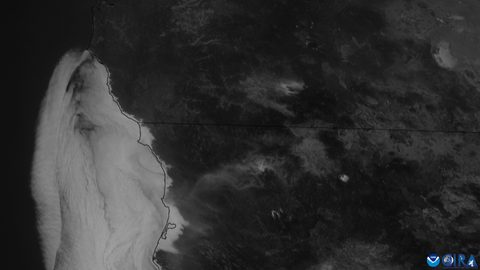 When the Carlsbad Race Falls and What the Coast Is Actually Like Then
When the Carlsbad triathlon typically falls, what the marine layer does to beach mornings in June, and which overlapping events make hotel rooms scarce and expensive.
-
 Getting to Carlsbad and Around the Coastal Villages Without a Fuss
How to reach Carlsbad by train or car from San Diego airport, navigate the Pronto transit app, and park near Tamarack Beach on race morning without getting a ticket.
-
 A Carlsbad Triathlon Weekend Hour by Hour and What to Do With the Rest
An hour-by-hour Carlsbad triathlon weekend plan: Friday arrival, Saturday packet pickup and shakeout, Sunday race morning through dinner, and Monday recovery before the trip home.
-
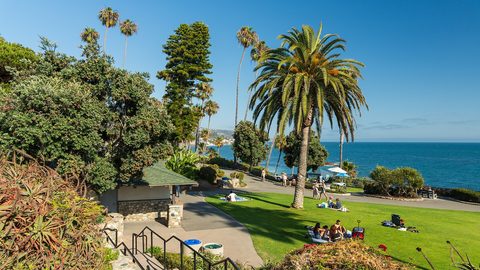 Tamarack Beach
Where the swim start and transition area sit at Tamarack Beach, why the parking meters are enforced from 8am, and which overflow lot fills before dawn on race morning.
-
 The Flower Fields
 at Carlsbad Ranch bloom March through May only. Whether they overlap with your race weekend and whether they are worth the advance tickets and drive time.
-
 Legoland California
 sits 10 minutes east of Tamarack Beach, opens at 10am, and is built for ages 2–12 — the ideal family reward after a Carlsbad triathlon weekend.