Packing for a Carlsbad Triathlon Weekend
A packing list for the Carlsbad triathlon's specific conditions: cold morning marine layer, a wetsuit-worthy ocean swim, and local shops for last-minute gear.

Pack for the Marine Layer, Not the Finish Line
Pack a throwaway sweatshirt. A race in Carlsbad that starts in damp gray and finishes in full sun demands a gear bag built for both extremes. That sweatshirt sits in transition before dawn, gets abandoned on a towel, and costs you nothing if you never see it again. The marine layer is the lead item on this packing list, not a minor footnote. It blankets the coast until 09:00 or 10:00 most mornings in late spring and early summer. First-time visitors consistently underestimate how cold it feels at 06:00 when you are standing in wet swim trunks on wet concrete.
Wetsuit Strategy for Carlsbad Water
The water at Tamarack Beach in August averages 68 degrees. That number hides a sting. Early June water temperature sits in the low-to-mid 60s, colder than out-of-towners expect. A 3/2mm fullsuit or sleeveless is the standard local choice. Do not assume you can buy your specific race-day wetsuit when you land. Roka, headquartered in Carlsbad at 5850 El Camino Real, carries the largest local retail selection and can do same-day or next-day minor repairs. If you need a particular model in your size, bring it. Local rental wetsuits run roughly $25 to $40 per day. Check with surf shops for current pricing. Rental fleets are one-size-fits-most and vanish during race weekends.
Apply sunscreen after the fog burns off, not before. The UV index in August peaks at 9 to 10, very high, but sunscreen applied at 05:30 under cloud cover is partially wiped off by the time you hit the bike leg. Reapply a water-resistant SPF 50+ formula every 80 minutes. Vertra, Sun Bum, and Headhunter brands are sold at Carlsbad surf shops and at the beach concession. Expect to pay roughly $12 to $18 per stick; prices are set by the vendor. The failure case: burnt shoulders by 10:30 because you trusted the morning gray.
What to Bring from Home Vs. What to Buy Locally
Bring These From Home
Bring your wetsuit, your bike shoes, your helmet, your race belt, your timing chip, your swim goggles with a tinted lens for the morning glare off a gray sea, body glide or anti-chafe, and your post-race dry clothes. Local bike shops like Nytro Multisport at 940 Tamarack Avenue, roughly a mile from the beach, open at 09:00 on Saturday and 10:00 on Sunday. That is too late for a morning race start. If your goggles snap or your race belt breaks at 05:30, you have no backup. Pack spares for anything that would end your race.
Spare inner tubes for 700c wheels (700x18-25c or 700x23-28c) and 16g threaded CO2 cartridges are easy to find locally. Nutrition gels, bars, and drink mix are also widely available. International travellers: commercially packaged, shelf-stable sports nutrition in personal-use quantities is admissible through US Customs, but you must declare all food items. The fine for an undeclared prohibited item starts at $300 for a first offense. Check current CBP guidance before you pack. Prohibited items include fresh fruit and vegetables and most meat products.
Buy These After You Land
Buy CO2 cartridges, nutrition, sunscreen, and a throwaway sweatshirt or hoodie from a local shop. If your bike breaks, Nytro Multisport offers assembly service. Their rates run roughly $60 to $90; call ahead for the current price. They also rent triathlon bikes. Rental rates fall in the $80 to $120 per day range, or $240 to $360 for a race weekend. Reserve 4 to 6 weeks in advance minimum. For bike repairs, the hex keys you need for reassembly are 4mm, 5mm, and 6mm, plus a torque wrench in the 4 to 6 Nm range, a pedal wrench, and a floor pump with a Presta head. If you flew Southwest Airlines, your bike checks free as long as it is under 50 pounds and fits in a case. United charges a bike fee each way, typically around $100. Delta and American also charge bike fees each way, typically around $150. Confirm with your carrier before you book.
Parking, Phones, and the Sunday Trap
The Tamarack Beach parking meters are enforced aggressively from 08:00. Payment requires the app or a credit card. Cell service near the lifeguard tower is patchy, so the app may not load. Bring a credit card for the meter as a backup. Or use a waterproof phone case to keep your phone dry and accessible. The overflow lot at the Oceanside Civic Center fills by 06:30 on race morning. Arrive by 05:30 or find parking in Carlsbad Village and walk.
The Coaster train does not run early enough on Sundays for a morning race start. The first southbound departure from Carlsbad Village Station on Sunday is at 09:58. If your hotel is in downtown San Diego and you planned to ride the train up, you cannot. Drive or book a rideshare the night before. Rideshare from San Diego International Airport to Carlsbad costs roughly $55 to $90 one-way; fares fluctuate. By car, the 34-mile drive takes 35 to 50 minutes in free-flowing traffic but stretches to 75 minutes in weekday afternoon congestion.
Many Carlsbad Village restaurants close by 20:00 on Sundays. Your post-race dinner options shrink to pizza and fast casual after the race finishes. Plan for that or bring food. The first southbound Coaster arrives at Santa Fe Depot in downtown San Diego at 09:58 plus a 53-minute ride, so a celebratory brunch in the city is a lunch.

What Goes Wrong Most Often
The single most common failure: assuming you can walk or rely on rideshare between the race site, your hotel, and dinner without a plan. The coastal towns are spread across 15 miles. Rideshare wait times spike to 20 or 30 minutes when the race finishes. Book a car. The next most common failure: leaving behind the timing chip, race belt, body glide, a spare inner tube, CO2 cartridges, tinted swim goggles, flip-flops for transition, and post-race dry clothes. These are the items most frequently logged in local bike shop and race-day medical tent logs. The third failure: assuming the marine layer means you do not need sunscreen. It does not. Apply it after the burn-off and reapply every 80 minutes.
Read next
-
 Carlsbad Hotels What the Town Actually Has for Race Weekend
Carlsbad's hotels sorted for a triathlon weekend: Village walkability, La Costa resort recovery, and why Sunday late checkout matters for racers.
Carlsbad Hotels What the Town Actually Has for Race Weekend
Carlsbad's hotels sorted for a triathlon weekend: Village walkability, La Costa resort recovery, and why Sunday late checkout matters for racers.
-
 Where to Stay for the Carlsbad Triathlon Measured From Transition
Where to stay for the Carlsbad Triathlon, measured by walking or driving time to the Tamarack Beach transition area that opens before dawn.
Where to Stay for the Carlsbad Triathlon Measured From Transition
Where to stay for the Carlsbad Triathlon, measured by walking or driving time to the Tamarack Beach transition area that opens before dawn.
-
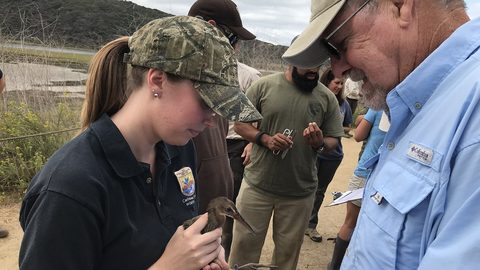 What to Do in Carlsbad Around the Race That Is Not the Race
Low-key Carlsbad activities for the day before and after a triathlon: peacock-filled historic parks, pier walks, calm lagoon trails, and a small surf museum.
What to Do in Carlsbad Around the Race That Is Not the Race
Low-key Carlsbad activities for the day before and after a triathlon: peacock-filled historic parks, pier walks, calm lagoon trails, and a small surf museum.
-
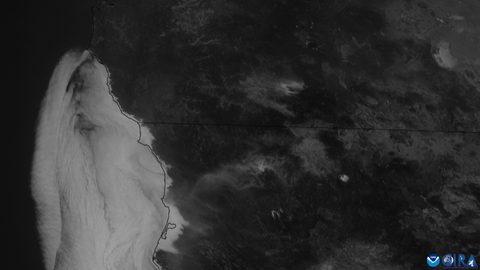 When the Carlsbad Race Falls and What the Coast Is Actually Like Then
When the Carlsbad triathlon typically falls, what the marine layer does to beach mornings in June, and which overlapping events make hotel rooms scarce and expensive.
When the Carlsbad Race Falls and What the Coast Is Actually Like Then
When the Carlsbad triathlon typically falls, what the marine layer does to beach mornings in June, and which overlapping events make hotel rooms scarce and expensive.
-
 Getting to Carlsbad and Around the Coastal Villages Without a Fuss
How to reach Carlsbad by train or car from San Diego airport, navigate the Pronto transit app, and park near Tamarack Beach on race morning without getting a ticket.
Getting to Carlsbad and Around the Coastal Villages Without a Fuss
How to reach Carlsbad by train or car from San Diego airport, navigate the Pronto transit app, and park near Tamarack Beach on race morning without getting a ticket.
-
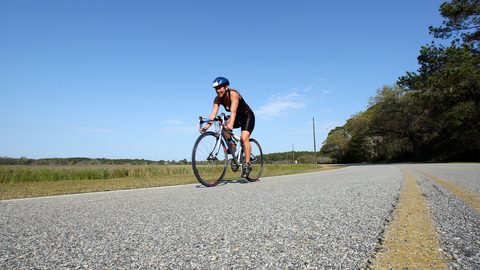 A Carlsbad Triathlon Weekend Hour by Hour and What to Do With the Rest
An hour-by-hour Carlsbad triathlon weekend plan: Friday arrival, Saturday packet pickup and shakeout, Sunday race morning through dinner, and Monday recovery before the trip home.
A Carlsbad Triathlon Weekend Hour by Hour and What to Do With the Rest
An hour-by-hour Carlsbad triathlon weekend plan: Friday arrival, Saturday packet pickup and shakeout, Sunday race morning through dinner, and Monday recovery before the trip home.
-
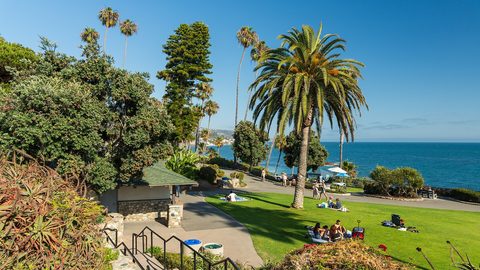 Tamarack Beach
Where the swim start and transition area sit at Tamarack Beach, why the parking meters are enforced from 8am, and which overflow lot fills before dawn on race morning.
Tamarack Beach
Where the swim start and transition area sit at Tamarack Beach, why the parking meters are enforced from 8am, and which overflow lot fills before dawn on race morning.
-
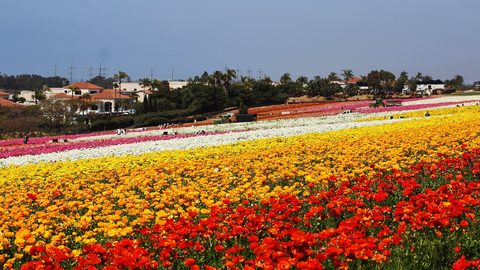 The Flower Fields
 at Carlsbad Ranch bloom March through May only. Whether they overlap with your race weekend and whether they are worth the advance tickets and drive time.
The Flower Fields
The Flower Fields at Carlsbad Ranch bloom March through May only. Whether they overlap with your race weekend and whether they are worth the advance tickets and drive time.
-
 Legoland California
 sits 10 minutes east of Tamarack Beach, opens at 10am, and is built for ages 2–12 — the ideal family reward after a Carlsbad triathlon weekend.
Legoland California
Legoland California sits 10 minutes east of Tamarack Beach, opens at 10am, and is built for ages 2–12 — the ideal family reward after a Carlsbad triathlon weekend.